 Research
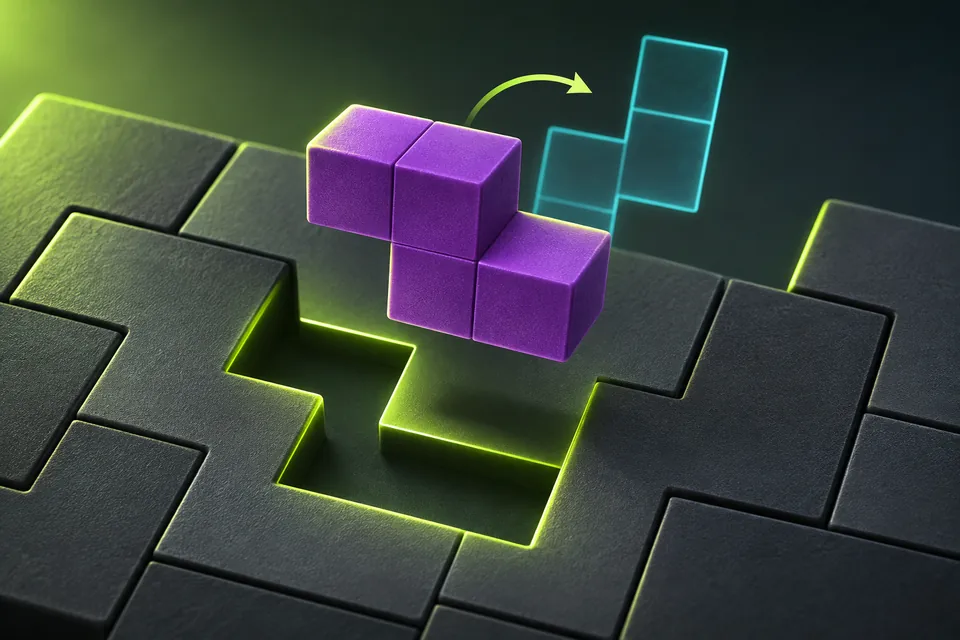
Tetris Piece Rotation and the Moves Players Undo
Tetris piece rotation can help a player inspect a fit before committing. A 1996 study tracked extra turns and showed why a move count needs context.
Read the storyExplore player motivations, game design and the science behind play.
Clear explanations. Real sources. A healthy dose of curiosity.
ResearchTetris piece rotation can help a player inspect a fit before committing. A 1996 study tracked extra turns and showed why a move count needs context.
Read the story Research
Optional objectives in games can send players along a detour. Two 2011 game tests compared collectible placement, level progress, play time and returns.
Read the story Research
Positive chat in online games can be read with doubt. A 2023 League of Legends survey separates perceived typicality, written reactions and sarcasm ratings.
Read the story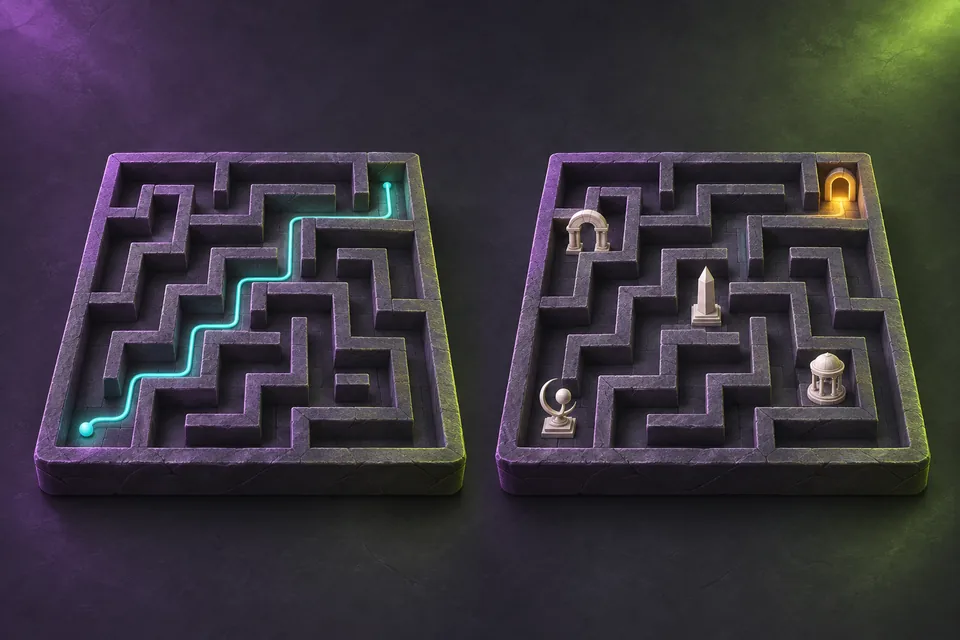 Research
Game navigation aids can help players reach a destination. Read a 2023 experiment on trails, guided movement and finding routes after assistance ends.
Read the story Research
Game network latency can affect actions differently. Read a 2010 bot experiment on precision and timing, with clear limits for human play and modern games.
Read the story Research
Game difficulty choices can sit in a menu, inside play or with an automatic system. Read what two 2016 experiments found about control and effort.
Read the story Research
Game loading screens can show progress, blend into travel or leave room to play. Read a 2023 interface study and compare two historical examples.
Read the story Research
Peak-end effects in games concern remembered experience. Read a 2016 study of difficulty sequences, challenge ratings and mixed replay preferences.
Read the story Research
Audience participation games let viewers change the action. Read a 2024 fighting-game study of spectator input, preferences and fixed-order limits.
Read the story Research
Game HUD design depends on the decision a display supports. Read a 2018 FPS study comparing ammo counters and health displays, with task-specific limits.
Read the story Research
Game leaderboards do not automatically explain return visits. Read a 2017 Quantum Moves study, its replay definition, null results and limits of comparison.
Read the story Research
Natural mapping in games can change how control feels. Explore a 2013 racing study separating spatial presence, reported control and race results.
Read the story Research
Explore player uncertainty through an original game-experience study, separating reported understanding, unpredictable outcomes and measurement limits.
Read the story Research
Explore cheating in online games through a 2012 Steam network study, keeping friendship associations separate from evidence of social influence.
Read the story Research
Explore game audio cues through a 2008 qualitative study of muted play, including lost information, reduced distraction and important limits.
Read the story Research
Explore game AI expectations through two 2015 experiments, distinguishing reported immersion, feature descriptions and evidence of actual adaptation.
Read the story Research
Explore procedural generation and immersion through a small 2017 level-design study, its mixed statistical results and the limits of one comparison.
Read the story Research
Respawn mechanics determine what a failed attempt resets. A 2021 platformer study compares restart locations and separates player-experience ratings and limits.
Read the story Research
Game tutorial design needs a specific learning question. A 2012 experiment compared instructions across three games, with different results and clear limits.
Read the story Research
Player agency in games involves both choices and their consequences. A 2012 story experiment separates branching paths, immediate feedback and reported control.
Read the story Research
VR time perception research separates felt duration from elapsed play. Read a five-minute maze experiment, its display comparison and important order effect.
Read the story Research
Explore juicy game design through haptic feedback research: what a mobile Breakout experiment found, why stronger vibration is not a universal upgrade.
Read the story Research
What does the Proteus effect mean for gaming? Explore original avatar experiments, a later online replication and the limits of claims about player behavior.
Read the story Research
Explore research on spaced practice in gaming, from League of Legends records to a small fighting-game study, with limits and a practical review exercise.
Read the story Research
Read city-builder water systems as models: separate capacity, demand, quality and maintenance, then explore why real water operations require measured inputs.
Read the story Research
Explore how medical simulation uses objectives, guided reflection and evaluation, and why a game's score alone cannot establish professional competence.
Read the story Research
An adult-audience look at BeerFest Morelos's browser timing game: simple controls, readable targets, short rounds and the difference between sharing a score and live multiplayer.
Read the story History
Explore the original GAMR study, its questions about games and players, and the clear boundary between that research and this independent site.
Read the story Research
Explore achievement, connection, discovery and choice in games, using original motivation studies without squeezing every player into a type.
Read the story Research
A careful look at personality research in games: what behavioral associations can reveal, why context matters, and where player labels fail.
Read the story Research
Compare the decisions, information and teamwork in MOBAs, MMORPGs and FPS games, without treating a genre as a test of a player’s personality.
Read the story Research
Learn to read game privacy notices, distinguish gameplay records from inferred profiles, and ask useful questions before sharing player data.
Read the story Research
Learn how to assess claims about games and cognitive skills by checking study design, comparison groups, measured tasks and transfer limits.
Read the story Research
Explore how shared goals, information and rewards shape cooperation in games, with careful distinctions between experiments and everyday play.
Read the story