Game Collection Interfaces: Keeping an Item’s History
Game collection interfaces can record why a particular item matters. A 2016 survey connects object value with proposed ways to preserve its play history.
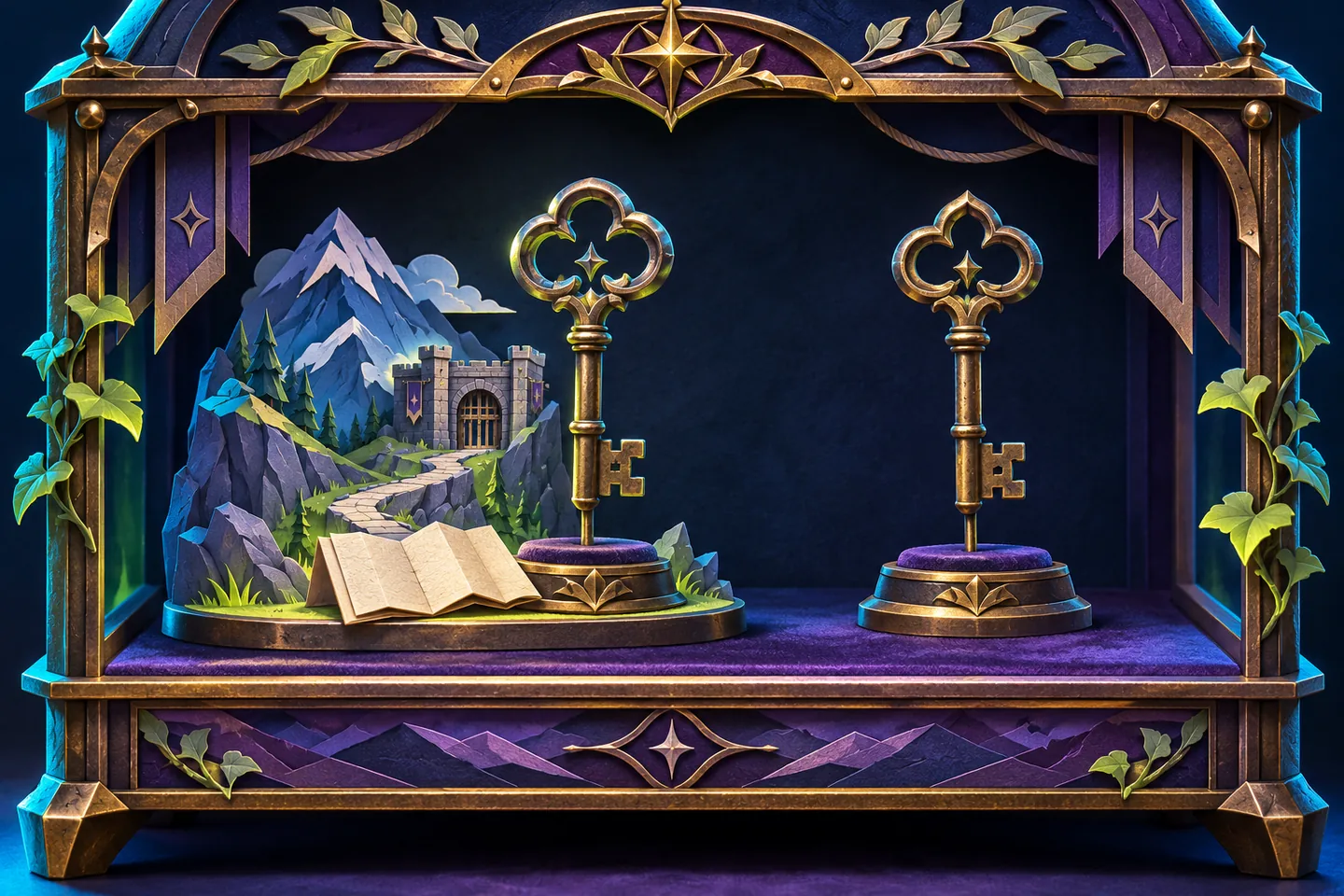
Separate a kind from a keepsake
Game collection interfaces can describe a particular object alongside its place in a set. Recognizing a bronze key’s shape tells you what kind of thing it is. Explaining why its owner kept that key requires information about that particular instance.
Imagine two bronze keys in a fictional tower game. Both open the same gate. One was found alone in a chest, while the other arrived as a gift during a friend’s first expedition. A list containing two identical icons would preserve the quantity while leaving those histories indistinguishable.
The survey asked about favored objects
Toups and colleagues’ 2016 paper analyzed 189 cleaned survey responses from adults interested in collecting digital game objects. Respondents named favorite objects and selected a main reason for valuing them.
Choosing one main reason gives the analysis a focused answer. It also compresses the possibility that the same object is useful, attractive and remembered fondly. For our invented keys, selecting usefulness would leave the gift’s history unmentioned, even if that history explains why its owner keeps this particular copy.
Context became a design proposal
Some accounts connected objects with memories and personal collections. The authors proposed preserving acquisition or use context and allowing personal annotations.
A prototype for the tower collection could give each key its own entry. One field might report the chest where the game recorded its discovery. Another could hold a note written by the owner. Labeling those fields would distinguish a recorded event from an interpretation added later, while letting both accompany the object.
Distinguish an archive from usable equipment
The paper cautions that preserving an object’s mechanics outside normal possession could change inventory decisions.
Suppose a key is consumed when opening the tower gate. Keeping a record of that key would preserve something to revisit. Making the archived entry unlock the gate again would change the rule about consumption. Those two designs need different descriptions, even if their collection screens display the same image. Nothing in this fictional example establishes which version a player would prefer.
Retain the survey’s boundaries
Recruitment targeted collectors through social media and campus flyers. Answers were self-reported, and the analysis was exploratory.
The sample can inform questions about valued possessions without estimating how common collecting is among everyone who plays. It also leaves an interface proposal awaiting an interface comparison. An explanation for keeping a key does not establish that adding a history field improves navigation, satisfaction or continued play.
Name what the collection preserves
When describing the tower prototype, specify whether an entry represents an object type, a particular acquired instance or a surviving record after use. Then identify which history comes from game events and which meaning the owner added. These choices give a concrete account of the proposed collection without requiring every item to have an elaborate story.
The two keys make that distinction visible: equal function and matching appearance can accompany different histories. A collection design can leave space to describe those histories while preserving the separate question of what the items currently do. Both sources below concern this one research project.
Keep exploring
Sources & further reading
Have a correction? Tell our editorial team.