First-Person vs. Third-Person Camera: What a Skyrim Study Measured
How does a first-person vs. third-person camera change reported immersion? A 2015 Skyrim study compared two assigned views and checked player preference.
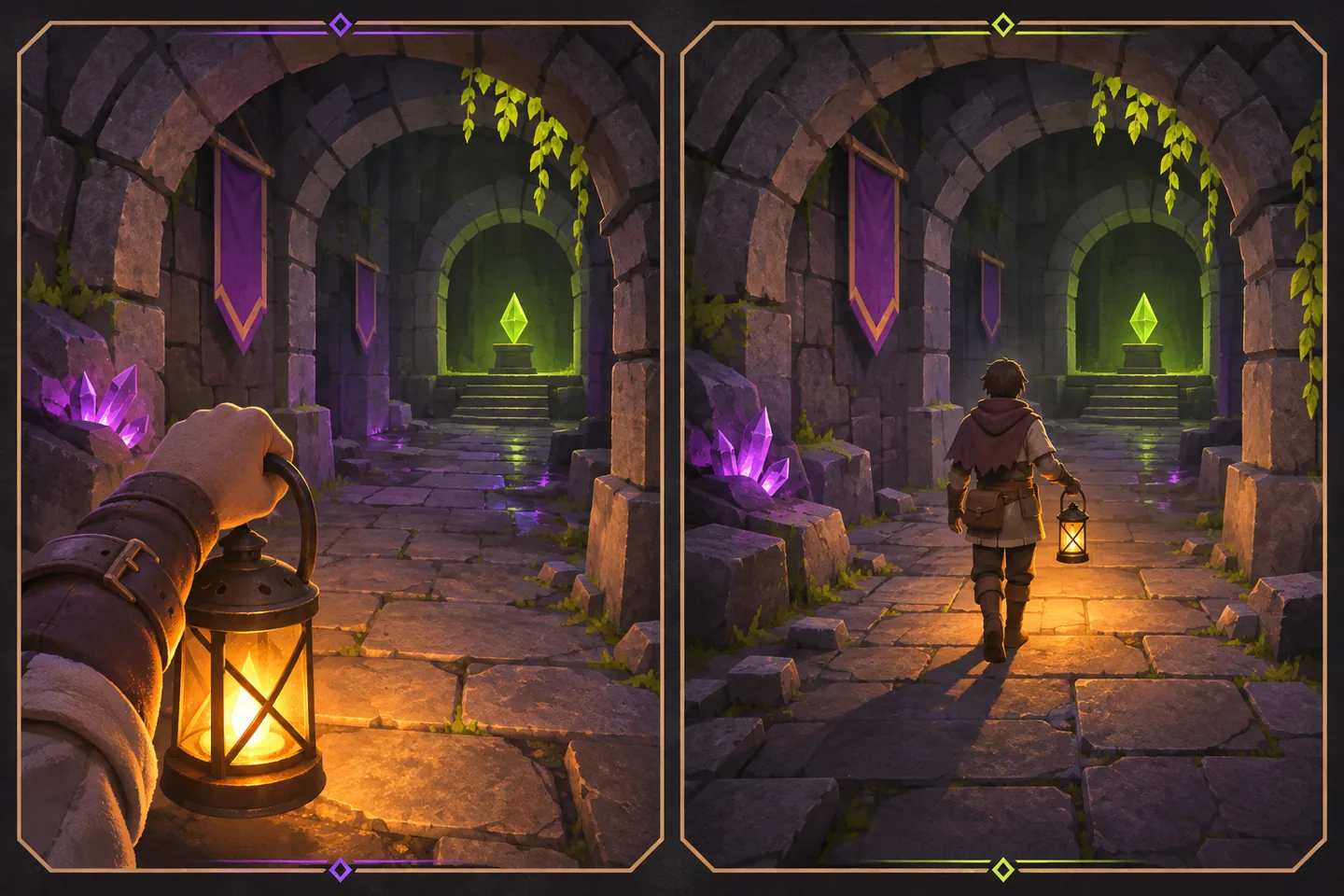
Same passage, different views
A first-person vs. third-person camera comparison starts with what each view puts on screen. In first person, the scene is framed from the character’s position. A trailing third-person camera places the character inside the scene, where you can see their position relative to the surroundings.
Imagine a fictional ruin with a narrow ledge and a glowing inscription across the gap. One view could make the inscription easier to read from the ledge. Another could show how much room remains beside the character’s boots. Both details can hold your attention, for different reasons.
One assigned camera for a short quest
In 2015, Denisova and Cairns randomly assigned 40 adults to one fixed Skyrim perspective on PlayStation 3. After 15 minutes they rated their immersion and then reported their usual camera preference.
Each person rated play from their assigned view. A different experiment could ask players to use both cameras in the same place and pick one. That would answer a choice question, while the Skyrim experiment compared what two groups reported after playing under different camera assignments.
The scores differed across camera groups
The first-person group reported higher overall immersion. Assigned views also differed on reported challenge and cognitive involvement. Differences in emotional involvement and perceived control did not reach statistical significance.
In the fictional ruin, a player could spend the whole crossing judging the ledge and scarcely notice the room around them. Another could feel just as invested in the character while finding the crossing easier to read. A single score can combine experiences that would matter differently to a designer.
Preference is a separate question
For the overall immersion score, the interaction between reported preference and the camera used fell short of statistical significance. In the challenge component, the study did report a significant interaction.
That distinction matters when interpreting averages. An overall difference could coexist with a smaller difference among people who favor one view. This sample leaves the size of such differences uncertain. It would take a comparison with more people in each preference group to estimate them with greater precision.
Keep the result with its quest
The study measured ratings after one short quest. Which feature of the camera accounted for the scores remains open.
In the ledge example, changing camera mode could change which floor tiles are visible and how much of the inscription fits in the frame. An immersion score alone cannot tell you which part of the scene a player saw or how close they came to slipping.
Give the next comparison a specific task
A proposed test could put the same inscription and ledge in both views. Keep the route and controls fixed. Record missed inscriptions and slips separately from each player’s report of involvement. Ask about camera preference before play if the goal is to compare people by their existing preferences.
Afterward, a separate free-choice crossing could show which view each person selects when switching is available. A player might prefer a camera for the crossing and switch once they reach the inscription. Measuring both tasks would help explain when they switch and which information they need.
Keep exploring
Sources & further reading
Have a correction? Tell our editorial team.