Optional Objectives in Games Can Change the Main Route
Optional objectives in games can send players along a detour. Two 2011 game tests compared collectible placement, level progress, play time and returns.
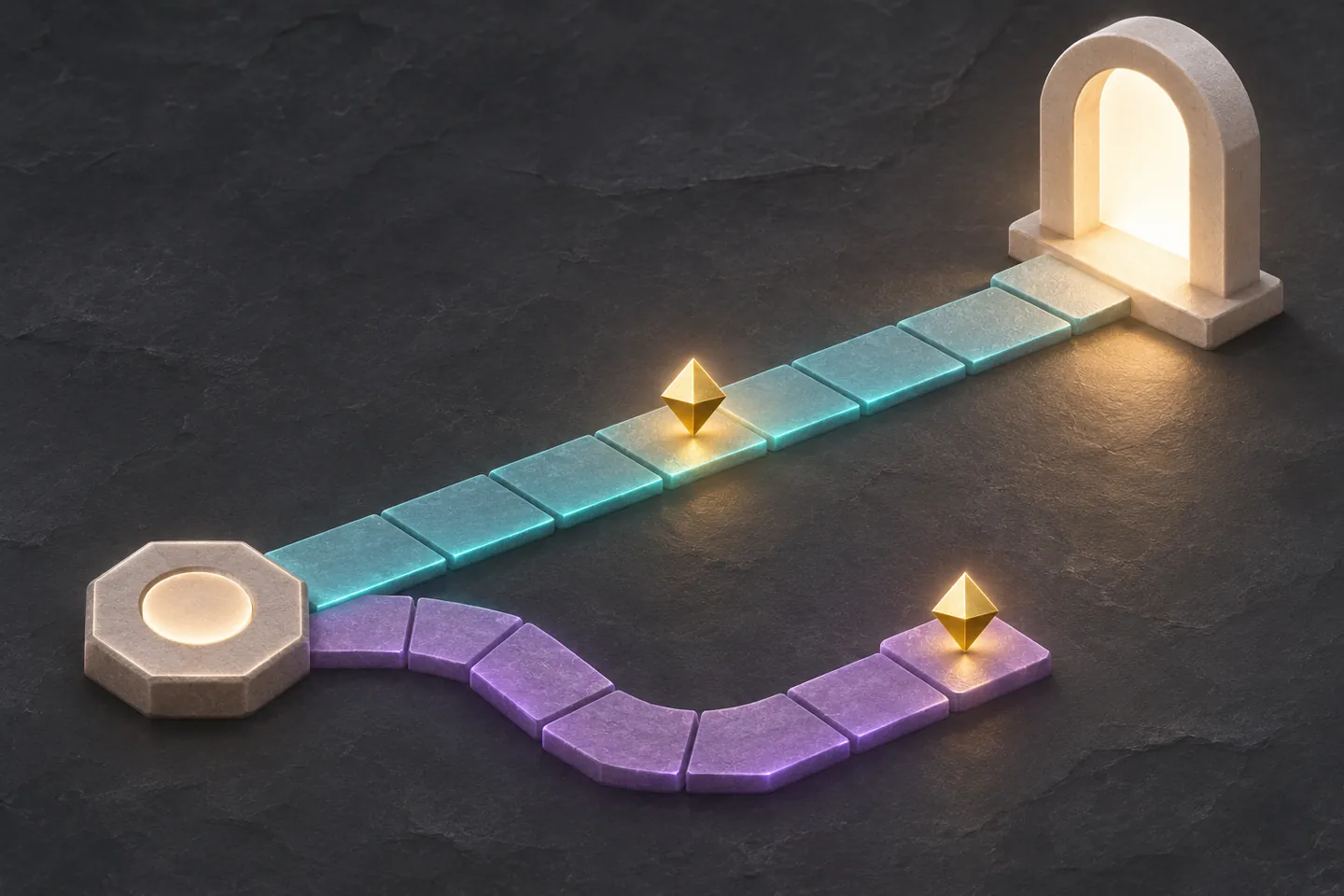
A pickup can change the puzzle
Optional objectives in games can change the route a player plans. In an invented wiring puzzle, a generator at A2 must power a pump at D2. The circuit must follow one continuous path through horizontally or vertically adjacent squares. The direct route runs through B2 and C2, using three connections.
The token counts when the path passes through its square. Put it at C2 and the direct route collects it. Move it to C1 and the shortest route that collects it needs five connections. The pump stays in the same place, while the token can give a player a reason to build a different circuit.
Three versions in two Flash games
In 2011, Andersen and colleagues randomly assigned new players within Refraction and Hello Worlds to versions with no coins, coins that required a detour, or coins on the intended route. A return meant loading the game again after the first session.
The fictional token could look equally prominent in either square. Someone seeing it for the first time may plan around it before discovering which circuit is sufficient. That possibility makes the choice of location relevant even when the level lets the player finish without the token.
Detour coins changed level progress
Players with detour coins completed fewer levels in both games than those without coins. Refraction's median fell from 20 levels to 17. The return comparisons showed no statistically significant difference in either game.
A count of levels records completed puzzles. It leaves open what a player tried on an unfinished one. In the wiring example, a partly built circuit might show that the player spent several moves toward C1. The completion count would record only that the level remained unfinished.
Moving the coins changed the comparison
Coins on the intended route yielded more completed levels, longer play and higher return rates than detour coins in both games. Against no coins, Hello Worlds showed no significant differences on those measures.
The baseline matters when describing that result. If the C2 token performs better than the C1 token in a future test, that comparison would favor one placement. A version without the token provides a separate comparison for asking whether adding the token changes what players do at all.
The reward and the clue arrive together
Moving Refraction's coins made them easier to collect and hinted at the intended solution. The researchers logged behavior, leaving players' reasons for stopping unresolved.
In the invented puzzle, a token at C2 marks a useful square. A player could follow that clue even with little interest in collecting tokens. A separate version could highlight C2 without awarding a pickup. Comparing those two versions would help examine what the reward adds once the route cue is present.
Observe the route and the outcome
A proposed comparison could give each player the same pump and wire rules, then change only the token location. Record the first branch they build, the number of connections they place and whether the pump receives power. Those observations could locate the point where the route starts to change.
A player who powers the pump first and later rewires through C1 has approached the token differently from someone who builds toward C1 and leaves the pump disconnected. Both may have placed five connections. Keeping their order of actions would help explain how the optional goal fit into each attempt.
Keep exploring
Sources & further reading
- Andersen et al. (2011) · Full FDG study ↗
- University of Washington · Project record for the same study ↗
Have a correction? Tell our editorial team.