Word Guess Duplicate Letters: Count Copies Before Crossing Out
Decode Word Guess duplicate letters by reserving green matches before gold. Use APPLE examples to distinguish missing letters from surplus guessed copies.
Read a repeated letter across the whole row
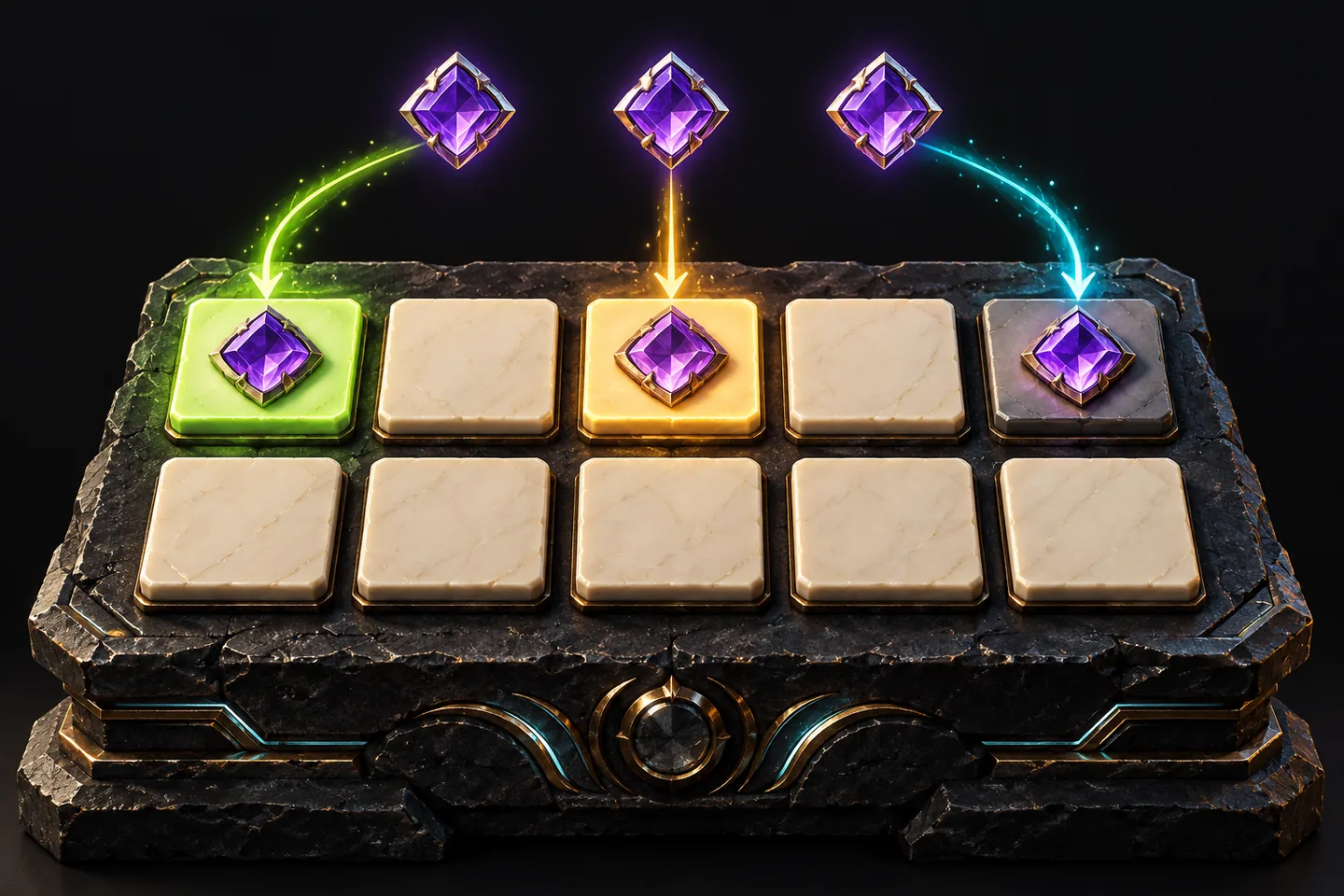
Word Guess duplicate letters need to be read across the whole submitted row. A green tile marks an exact position; gold uses a matching copy elsewhere; gray means no matching copy remains for that occurrence. Seeing gold and gray on the same letter is therefore possible.
This guide uses ProjectGAMR's casual version checked November 1, 2026: a five-letter answer, six guesses and accepted entries consisting of any five letters A–Z. Its worked examples disclose APPLE as a training answer. They do not predict the answer in your next round.
Reserve green matches before allocating gold
Start by pairing every exact-position match with its answer position. Those copies are already accounted for. Then inspect the other guess positions from left to right, pairing each with an unused matching answer letter if one exists. A copy already assigned to green cannot also support a gold tile.
Ohio Wesleyan University's April 2024 contest statement describes this greens-first allocation in its letter-puzzle exercise. The useful playing habit is to keep an inventory of copies. Reading each tile as an independent yes-or-no question about the entire alphabet would lose that information.
ALLEY shows why one gray L does not remove every L
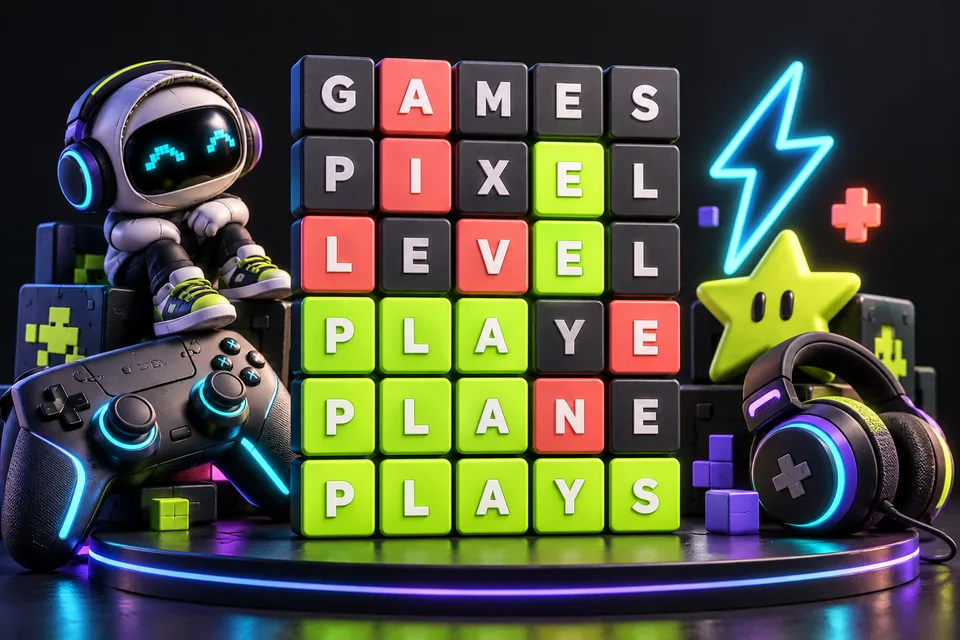
Against APPLE, the guess ALLEY receives green, gold, gray, gold, gray. The A is correctly placed. The first guessed L uses the answer's one L, while the second guessed L has no further copy available. The E matches elsewhere, and Y has no match.
Both L clues must survive in your notes: one L belongs in the answer, but neither guessed L position is correct. Crossing L out entirely would contradict the gold tile. Retaining two Ls would contradict the gray excess copy. This row establishes exactly one L, rather than merely suggesting that L is useful.
PUPPY combines a fixed match with a surplus copy
Now compare APPLE with PUPPY. Its feedback is gold, gray, green, gray, gray. Position three's P is reserved as green. The P at position one can use the other P; the P at position four cannot use either copy again. U and Y are gray as well.
This guess establishes exactly two Ps, including one at position three. The gold P still needs another position, and its own guessed position is excluded. The gray P limits the quantity; it does not cancel either positive clue. Keep the fixed position, excluded positions and count as separate notes.
Distinguish a minimum count from an exact count
If two copies of a letter receive positive clues and no further guessed copy is gray, that row establishes at least two. It has not tested whether another copy exists. Against APPLE, PAPER gives gold, gold, green, gold, gray: both guessed Ps receive positive clues, with no excess P tested.
Other rows and the answer pool can narrow the possibilities further. For a word you are considering as the answer, check whether it reproduces every previous feedback row, including repeated-letter counts. A candidate that fits one green position but would recolor an earlier gray excess copy is inconsistent with that earlier evidence.
Use the feedback without inventing an extra input rule
Type a five-letter guess and submit with Guess or Enter. This version normalizes letter case and surrounding spaces; malformed input is rejected without consuming a row. The field does not enforce your deduction notes. Accepting an entry therefore does not certify that it remains a possible answer.
Before submitting again, read every occurrence of a repeated letter together. After the sixth unsuccessful guess, the round reveals its answer; a correct guess ends it sooner. New game starts a fresh round. These examples teach feedback accounting, without promising a particular opening word, average score or guaranteed number of guesses.
Keep exploring
Sources & further reading
- ProjectGAMR Word Guess: current casual rules and playable version ↗
- Ohio Wesleyan University, April 6, 2024 programming contest: Question E, greens-first duplicate-letter feedback (pages 10–11) ↗
Have a correction? Tell our editorial team.