Asynchronous Multiplayer in Console Games: Shared Routes and Stories
See how asynchronous multiplayer in console games carries over a bridge in Death Stranding or the consequences of a choice in Tides of Tomorrow.
Ask what reaches your game
Asynchronous multiplayer in console games lets one player’s actions affect another player’s run without a shared session. A useful question to ask is what actually reaches you. In Death Stranding Director’s Cut, it might be a structure you can use. In Tides of Tomorrow, it can be the consequences of a choice you never made.
Both examples are from the PS5 editions. Think about what you might tell a friend afterward. In one game you could compare how you reached the same destination. In the other, you might compare what happened when you arrived.
Death Stranding can give you a new way across
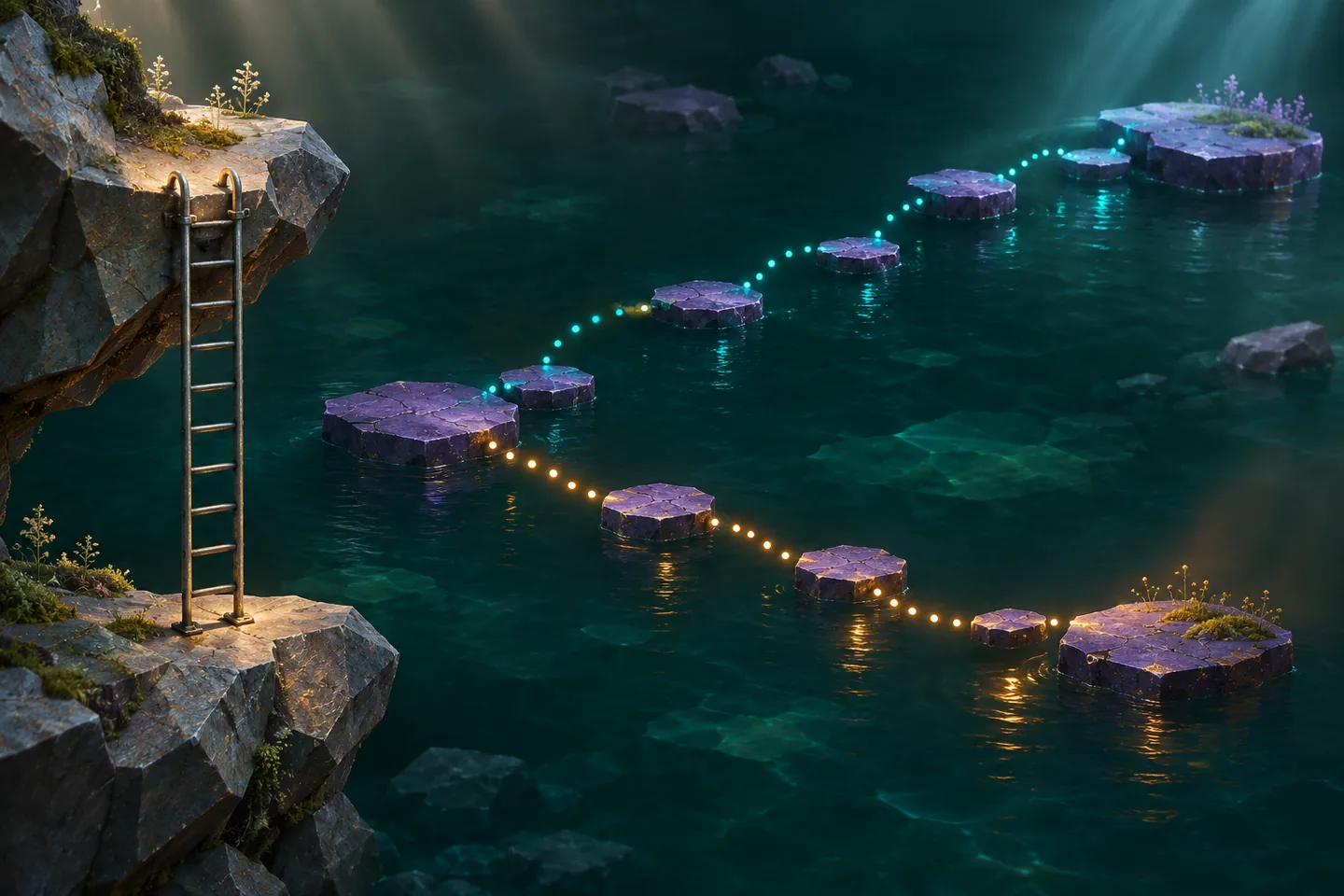
Kojima Productions’ guide describes a ladder left by an earlier player on a difficult route. The Social Strand System can make that ladder available in your game. You can use it and give the structure a Like. A ladder or bridge you leave behind might help somebody else.
Imagine carrying cargo toward a gap. If a ladder is already in place, you can consider crossing there. If the gap is empty, you might lay a ladder yourself or look for a different way across. The structure makes another route possible for the same delivery.
Leave room in your route plan
Kojima Productions says equipment and structures from other players may appear while you are online and within Chiral Network coverage. The PS5 store lists internet access and a PlayStation account for the Social Strand System.
If a delivery depends on a crossing, plan for what you can carry or build yourself. A route someone else describes may have been easy because they found a usable structure. Their directions can still help you find the terrain even if you arrive to a different setup.
In Tides of Tomorrow, choose whose run you follow
The PS5 store describes Online Story-Link as a choice you make when starting a solo run. You select an earlier playthrough to follow. DigixArt explains that this record includes earlier decisions, places visited and resources left behind. The game uses those details to shape what happens in your run.
The predecessor’s choices set up situations you can respond to in your own way. The decisions you make then become part of a Story-Link that another player can choose.
A race result can change the next player’s welcome
DigixArt’s director gives the example of Pleasureland, where a boat race can show the earlier player’s ghost. A win in that earlier race can also lead locals to treat your character as a celebrity when you arrive. The previous result matters before you set a time of your own.
If two friends describe different welcomes at Pleasureland, they can start by checking whose stories they followed. That is a more specific question than asking whether they took the same route through the level.
Compare the part another player changed
When you notice an effect from another run, name the thing it changes for you. A bridge gives you somewhere to walk. A shift in how a character greets you changes what you know about the situation and how you might respond.
If you compare sessions with a friend, record the equipment you found or the Story-Link you chose. That gives both of you a way to discuss what each run inherited, alongside the choices you made for yourselves.
Keep exploring
Sources & further reading
- Kojima Productions on the Social Strand System ↗
- Kojima Productions on Chiral Network coverage and online structures ↗
- Death Stranding Director’s Cut PS5 listing on the US PlayStation Store ↗
- DigixArt explains Online Story-Link and Pleasureland ↗
- Tides of Tomorrow PS5 listing on the US PlayStation Store ↗
Have a correction? Tell our editorial team.