Assist Mode in Platformers: Timing, Dashes and Fall Recovery
See what Assist Mode in platformers changes. Compare Celeste's speed and air dashes with the damage and pit recovery options in Mario Wonder on Switch 2.
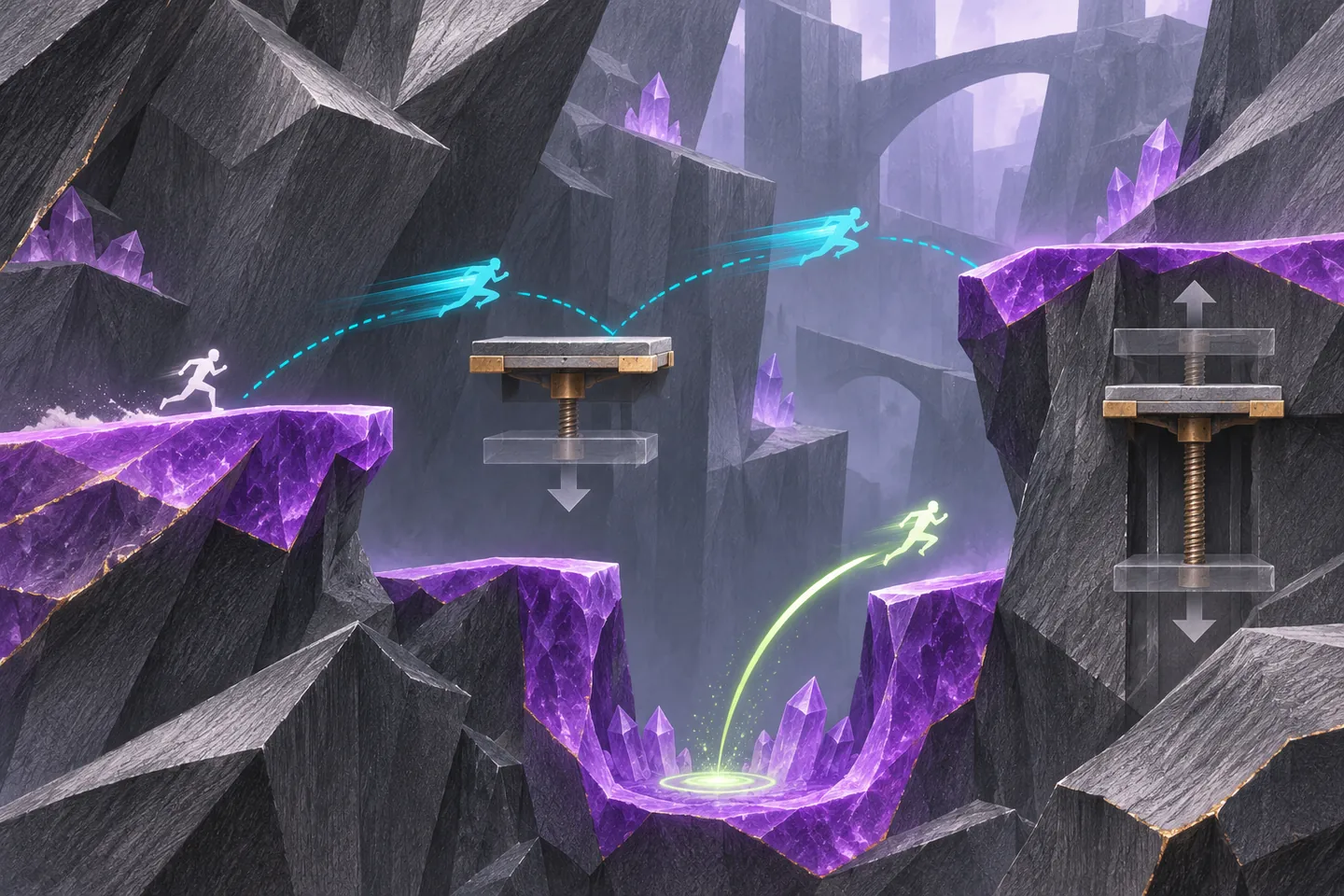
Look at the moment where a jump goes wrong
Assist Mode in platformers can change how much time you have to act, what you can do in midair, or what happens after a miss. Celeste and Super Mario Bros. Wonder offer different examples of those changes.
Picture a jump that goes wrong three times. You might press dash too late, run out of movement before reaching the ledge, or fall and spend most of the next attempt getting back to the gap. Each problem points to a different kind of help.
Celeste gives you more time to react
The developer's introduction to Celeste on PS4 explains that Assist Mode can slow the game down. If you know the order of the inputs but struggle to fit them into a fast sequence, slowing down gives you more time to enter them.
Imagine waiting for Madeline to reach the right height before pressing dash. At a slower speed, you can watch her approach that point for longer. Use the same route for another attempt so you can tell which cue you are reacting to.
An extra air dash changes which route you can take
Celeste's developer also lists extra air dashes among the Assist Mode options. That changes the moves available during a jump. Suppose you spend one dash getting around an obstacle and need another to reach a ledge. An extra dash gives you a second movement to plan.
If your goal is to work out a route with a single dash, try slowing the game first. If your immediate goal is to cross a room by taking a different path, see what becomes reachable with the extra dash.
Mario Wonder can reduce the cost of a fall
Nintendo's Americas support page describes Assist Mode for Super Mario Bros. Wonder – Nintendo Switch 2 Edition + Meetup in Bellabel Park. You can turn it on from the title screen or main menu. With the mode active, players can recover after falling into pits without losing a life and can avoid damage with any playable character.
Suppose you keep falling just short of a landing. Pit recovery lets you keep practicing with fewer lives lost. If enemy contact is what keeps interrupting your jumps, damage prevention gives you room to focus on the route.
Check which edition and character you are using
Nintendo's developers describe Yoshi and Nabbit as characters that can avoid damage in the original Switch game. They also describe an equippable badge that can bounce a player out of pits.
If you want to play as Peach with protection from damage, the Switch 2 Edition's Assist Mode is the documented option that lets you keep that character. Check the edition name when you look for the setting.
Choose an option for the part you want to practice
Pick one awkward jump and describe where the attempt breaks down. In Celeste, check whether the problem is the timing of the dash or the movement you have left. In Mario Wonder, check whether repeated falls or damage keep cutting the attempt short.
Try the setting that addresses that problem. Give yourself a clear goal for the next attempt, such as reaching the takeoff point or finding a landing cue you can recognize again.
Keep exploring
Sources & further reading
- Celeste developer on Assist Mode for PS4 ↗
- Celeste PS4 listing on the US PlayStation Store ↗
- Nintendo Americas Support on Mario Wonder Assist Mode ↗
- Nintendo's original Mario Wonder developer interview about characters and badges ↗
- US Nintendo Store listing for Mario Wonder's Switch 2 Edition ↗
Have a correction? Tell our editorial team.