Better Team Communication in MOBAs
Make MOBA calls clearer with short messages, honest uncertainty and specific next actions. Work through an objective setup without flooding team chat.
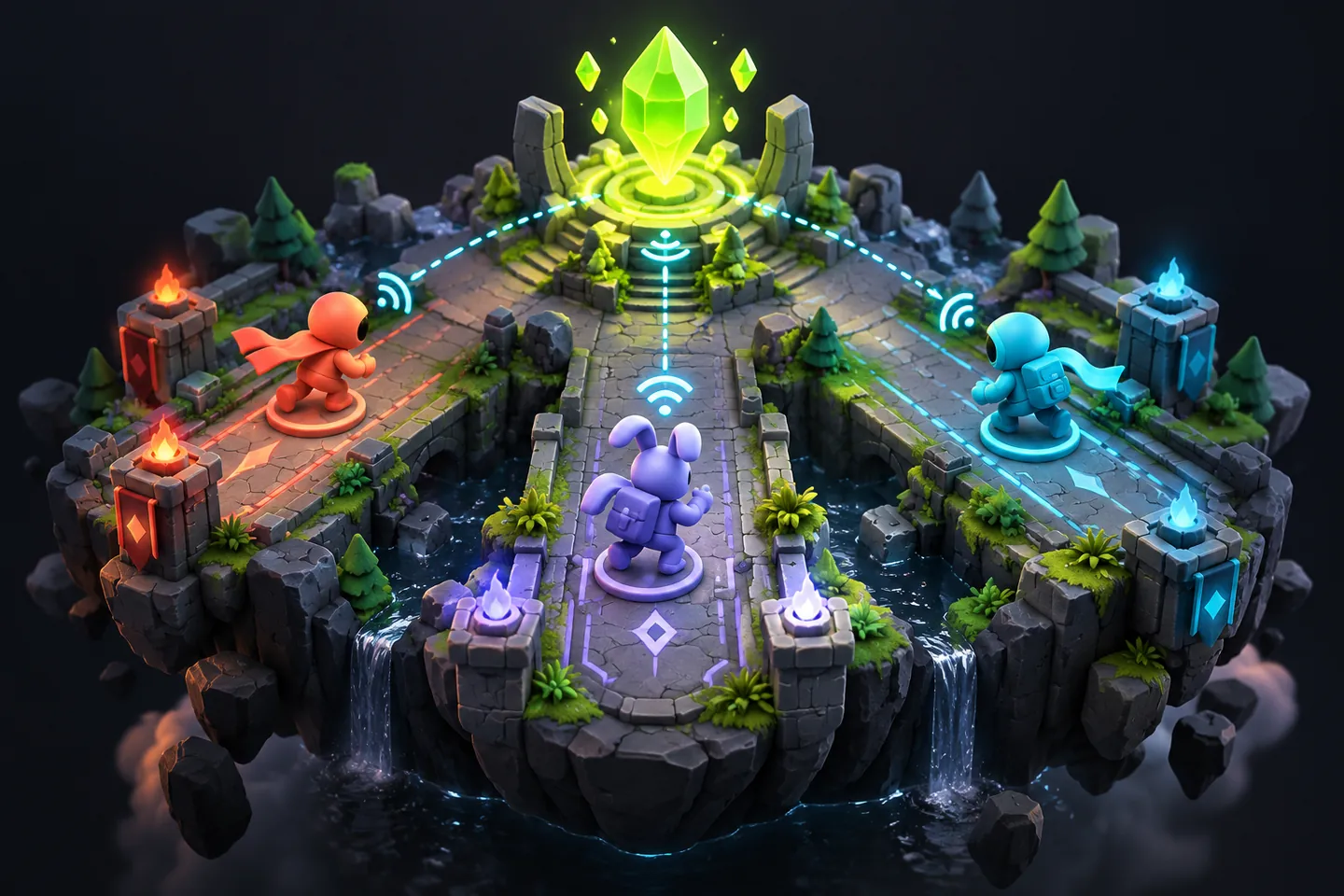
Communicate a decision, not your frustration
A useful call helps a teammate decide what to do next. “Two opponents in the river; wait for our support” gives a location and an action. “Team?” after a failed fight gives neither. Before sending a message, ask whether it changes someone’s immediate choice.
This guide offers a practical communication framework, not a guarantee of wins. For a concrete MOBA reference, Riot describes League of Legends as a five-player-per-side game with a Nexus objective and five recommended positions. Its map and role names provide examples here; timings, champion details and patch-specific strategies are intentionally left to current game documentation.
Use information, location and intent
Build a short call from three parts: what you know, where it matters, and what you propose. “Enemy jungler seen top; push bottom carefully” is more useful than “easy push,” because it shares the evidence behind the suggestion. Teammates may have information you do not, so keep room for a reply.
Separate sightings from guesses. “Mid missing” means you no longer see that opponent; it does not prove they are in a particular bush. “Possible move toward river” communicates uncertainty. A false precise call can send the team into a bad position, even when the sender was trying to be helpful.
Match the channel to the moment
Use the game’s location and intent pings for urgent information that should appear on the map. Riot’s Smart Ping documentation explains League’s ping system and its use on terrain or the mini-map. Check your own bindings rather than assuming a default shortcut works on every setup.
Use short text during a safe pause when the plan needs a little context. Voice can help an organized group, but it is not a requirement for useful communication. Avoid filling every channel with the same repeated call. Several contradictory signals can leave teammates less certain than one clear location and a concise action.
Walk through an objective setup
Imagine a team objective will soon be contestable. Your support is returning, two allies are nearby, and an opponent was last seen moving through the river. A useful sequence is: identify the location, state the missing teammate, propose waiting, then name the condition for starting.
For example: “Wait for support. Check river entrance together, then decide.” This is a hypothetical planning exercise, not a claim that any objective is always worth contesting. If an ally cannot arrive safely, adapt: trade for something elsewhere, retreat, or defend. A plan should update when the information changes, rather than become an argument about who called first.
Replace blame with the next assignment
After a lost fight, resist replaying every error while the next decision arrives. A useful reset might be “Defend middle together; I will cover bottom.” It names responsibilities people can act on. If a particular ability needs to be saved next time, say what it should answer, without turning the instruction into a personal attack.
When two plans conflict, describe the tradeoff in a sentence: “We are missing two players; contesting now risks another uneven fight.” That gives the team a reason to reconsider. Repeating the same command more loudly does not supply new information or make teammates able to arrive sooner.
Review your own message quality
After a game, choose three calls you made. Were they accurate, timely and actionable? Did you label uncertainty? Did the proposed move remain sensible after new information appeared? You control those qualities even when teammates choose differently or the match result is unfavorable.
For your next game, set a small communication goal: report a missing opponent promptly, name one regroup point, or give one clear assignment before an objective. Use mute and reporting tools when needed rather than engaging in harassment. A manageable channel and a respectful reset leave more attention for the decisions the team still has to make.
Sources & further reading
Have a correction? Tell our editorial team.