Your First MMORPG Group: Roles and Communication
Prepare for your first MMORPG dungeon with clear role expectations, a simple introduction and practical responses to unfamiliar mechanics or a group wipe.
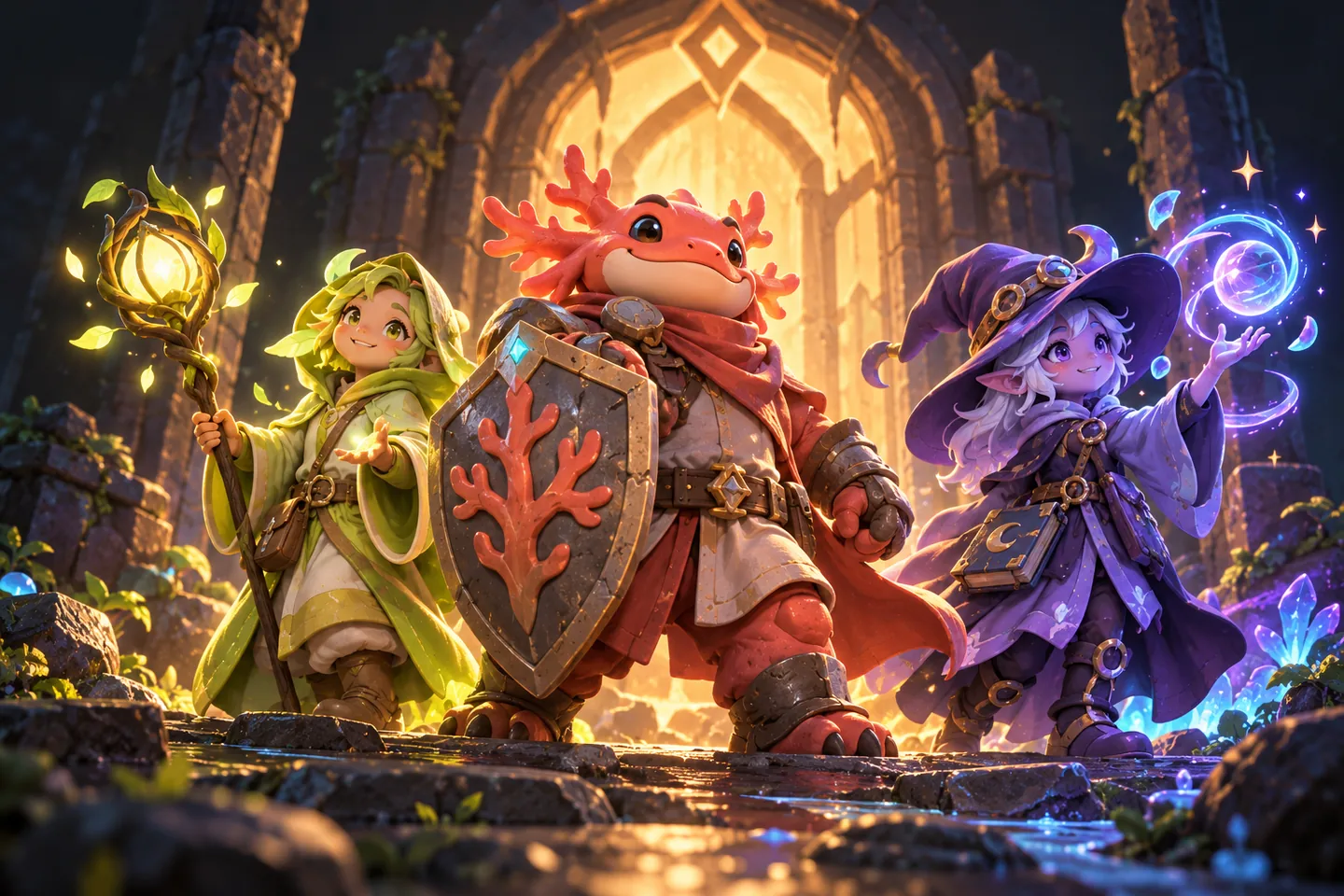
Choose a group that fits the learning goal
A first group goes more smoothly when expectations are explicit. Look for an introductory or learning activity rather than assuming every public listing welcomes a first-time explanation. Read the listed difficulty, role requirements and any stated experience expectations before joining.
This guide is a general preparation framework. As an example, World of Warcraft’s official new-player and Follower Dungeon pages explain ways to enter its group content. Other MMORPGs may use different role structures, queue systems or encounter rules. Check the current instructions for your game and activity. A familiar genre label does not make every dungeon work the same way.
Understand your job without doing everyone’s
In a common tank–healer–damage structure, the tank manages enemy attention and positioning, the healer supports survival, and damage players help defeat enemies while handling assigned mechanics. Exact duties vary by class and encounter. Choosing a role is a commitment to learn its relevant tools, not a promise to perform perfectly immediately.
Before entering, locate your important buttons and read their current descriptions. Identify how to interrupt, move out of danger, or protect yourself if your character has those abilities. Do not assume the healer can erase every mistake or that the tank can see every threat behind the group.
Say you are new before the first pull
A simple introduction is enough: “First time here, playing damage. Please flag any mechanic I need to handle.” It names your experience and the help you need. If you have watched a guide but not played the encounter, say that rather than presenting yourself as experienced.
Ask for one useful responsibility at a time. “Which enemy should I interrupt?” is easier to answer than “Explain the whole dungeon.” Agree on any markers or signals the group uses before they become urgent. If someone gives an unfamiliar abbreviation, ask what action they want instead of silently guessing its meaning.
Handle an unfamiliar mechanic
Imagine an enemy begins a dangerous cast, while a marked area appears under your character. You may need to move, interrupt, or follow an assigned position. The correct response depends on the encounter: a marker could mean spread out, gather together, or move away from an object.
Do not generalize a visual effect from another game. Use the encounter’s own explanation and ask the group during a safe pause. A useful clarification is “Does this marker mean I leave the group or stack with it?” That question converts a vague visual into a specific action you can recognize on the next attempt.
Reset after a wipe
When the group fails, pause before immediately restarting. Identify one mechanic that changed the outcome and agree on the next adjustment. “I missed the interrupt; I will handle the first cast, can someone take the second?” creates a plan. A long argument about whose damage was lower usually does not explain a missed mechanic.
If the group is moving faster than you can follow, state the concrete issue: “I need a moment to understand that mechanic before we pull again.” Others can choose whether the pace fits. Leaving a mismatched group politely is more useful than pretending to understand and repeating the same avoidable confusion.
Use a lower-pressure rehearsal when available
World of Warcraft’s Follower Dungeon introduction describes supported runs with NPC companions filling roles around the player. Where the current game offers such a mode for your chosen dungeon, it can provide space to explore the route and read abilities. Availability varies, so verify the supported activity rather than assuming every dungeon has this option.
After a first group, write down the one mechanic you now recognize and one question still unanswered. Keep your next learning goal small: a cleaner interrupt assignment, a better position, or a clearer request for help. Group confidence comes from understanding specific actions, not from hiding the fact that you are learning.
Sources & further reading
- Blizzard: World of Warcraft new-player starter guide, February 25, 2026 ↗
- Blizzard: Take the Lead in Follower Dungeons ↗
Have a correction? Tell our editorial team.