Card Shuffler Probability: Recount Before the Next Draw
Work out Card Shuffler probability from the remaining deck. Count hearts left after a heart or spade, update the next draw and restart with a fresh deck.
Count the cards that are still available
Card Shuffler probability changes as you remove cards. ProjectGAMR’s tool uses a 52-card deck without replacement. The version checked November 26, 2026 keeps each drawn card out until you start a fresh deck. Before the next draw, count what remains.
Choose one question for an original exercise, such as whether the next card will be a heart. You need two counts for that question, the hearts left and the size of the remaining deck. Write both before revealing another card.
Recount after drawing a heart
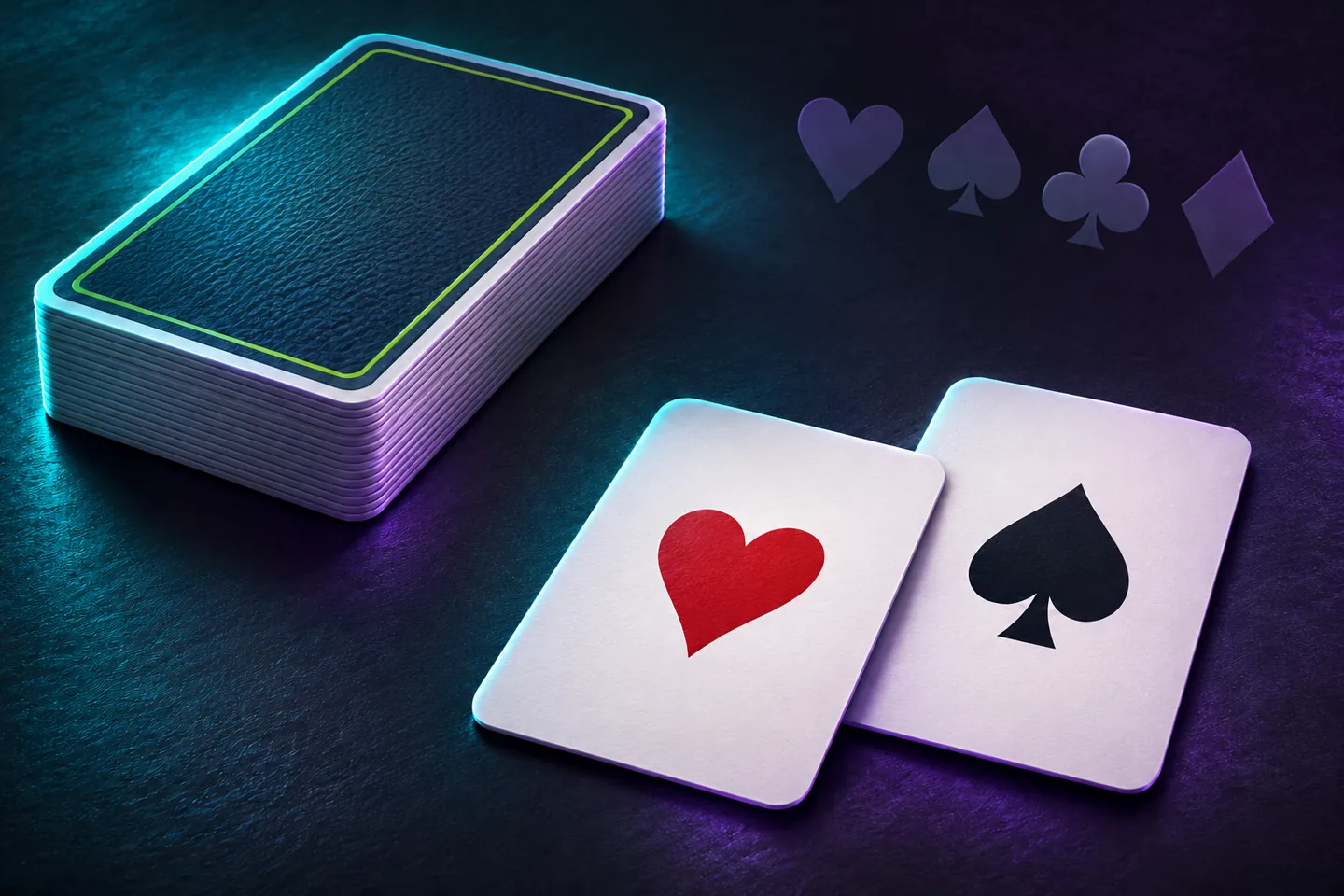
A controlled deal began with A♥. That left 51 cards, including twelve hearts. For an equally likely next card among those remaining, the heart probability is 12/51, approximately 23.53 percent. The fresh-deck calculation had been 13/52, or 25 percent.
Both counts decreased because the removed card was itself a heart. Keep the suit beside your draw record. Subtracting one only from the deck size would leave an extra heart in your calculation, even though that card is already outside the deck.
Compare an opening spade
A separate checked deal started with A♠. The deck again contained 51 cards, but all thirteen hearts were still available. This time the next-heart calculation is 13/51, approximately 25.49 percent. The two openings leave different fractions despite identical deck sizes.
OpenStax explains that removing an item can affect the probabilities of a later selection. Apply that idea by identifying the actual suit removed. A count of one card drawn gives only the denominator update, leaving the heart count to check separately.
Use the history for another update
In the heart-first example, Q♦ came next. Fifty cards remained, with twelve hearts among them. Before drawing again, the heart fraction became 12/50, or 24 percent. Removing that diamond changed the total while leaving the heart count alone.
For your own run, make a short ledger with cards drawn and hearts drawn. Subtract the first count from 52 and the second from thirteen. Those differences give the bottom and top of your next-heart fraction. Recalculate after each reveal.
Keep an observed heart separate from a two-card prediction
Before any draw, the probability of two consecutive hearts is 13/52 multiplied by 12/51. That gives 1/17, approximately 5.88 percent. The first heart is still part of the prediction at that point.
Once you have already seen A♥, the next-heart question uses 12/51 alone. Writing the question above your fraction helps preserve this distinction. “Will both upcoming cards be hearts?” and “After this heart, will the next card be another?” refer to different information.
Begin fresh counts after New game
The tested interface provides Draw a card and New game. New game rebuilds the complete deck and clears the displayed history. The checked full-deck run produced 52 distinct cards, then disabled drawing. Starting again made the previously drawn A♥ available.
Keep each deck’s notes on its own line. Start that line at thirteen hearts among 52 cards, then update from the new history. The controlled openings above illustrate the arithmetic, rather than predicting which card will begin your own shuffled run.
Keep exploring
Sources & further reading
- ProjectGAMR Card Shuffler rules ↗
- ProjectGAMR published deck and draw implementation ↗
- OpenStax Statistics: sampling and dependent events ↗
Have a correction? Tell our editorial team.