Asteroid Dodge Strategy: Leave Room for the Whole Rock
Build an Asteroid Dodge strategy around sideways space. Compare one and two left moves, judge each falling rock and keep an exit near the board edge.
Read the rock’s width and path together
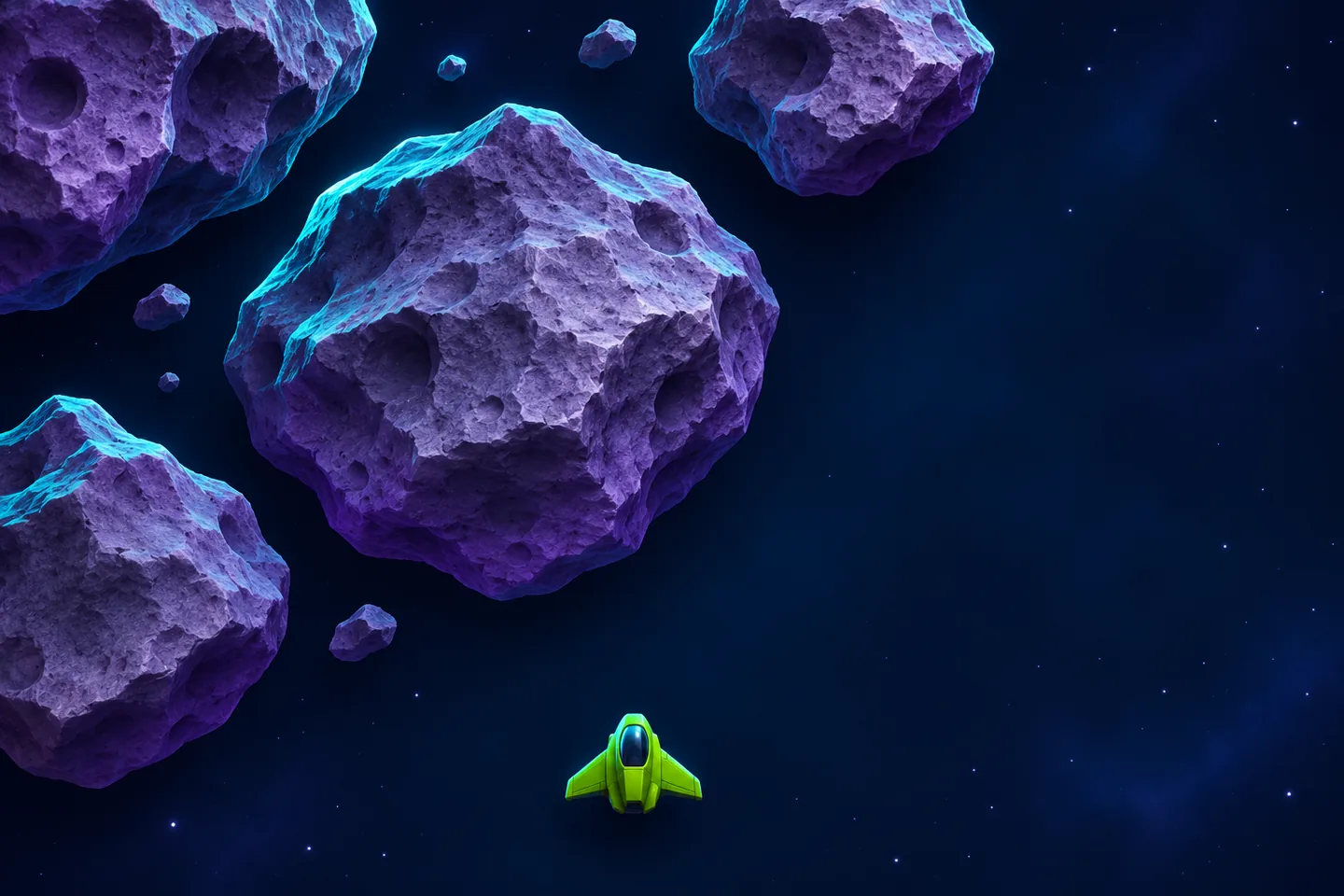
An Asteroid Dodge strategy needs enough sideways space for a falling rock to pass. This guide follows ProjectGAMR’s browser game checked November 27, 2026. A collision ends the run, so inspect the approach before the rock reaches your ship.
Watch which part of the field lies beneath the rock and where your ship could move. Choose a side with room beyond the approaching object. Keep a visible margin between the rock’s path and the place where you intend to stop.
Compare one left move with two
A controlled example started with the ship near the middle and a large rock descending almost directly above it. One press of the left direction button shifted the ship sideways. That movement still left it close enough to the rock for the run to end.
The comparison repeated the same approach with two left presses. The ship moved farther away and remained in play as that rock passed below. These checked movements illustrate one approach. The result gives you a reason to inspect the clearance required by each new rock.
Leave room beyond the rock’s center
Getting to one side of a rock’s center can still leave very little separation. In the checked example, the single move did not create enough clearance for that large rock. Think about the space occupied by both objects as they pass.
For an original practice task, choose an approaching rock and identify a destination beyond its side. Look at the gap you expect to preserve there. After moving, check whether the ship has actually reached that destination or still needs another adjustment.
Inspect the space beside the board edge
The ship stops at the board edge. If you are already near the left boundary, another left input may provide little or no extra room. Inspect the distance available before choosing that side as your exit.
Include other rocks in the same inspection. A wider move away from the first object could put the ship beneath another. Follow the intended destination upward through the field, then compare it with the other side before committing to a crowded gap.
Match the control to the adjustment
The direction buttons move the ship in steps. Holding a movement key continues moving it while play advances, and releasing the key stops that input. The checked keyboard example confirmed both the held movement and its release.
When practicing the one-step comparison, use deliberate button presses so that you can count the adjustments. With a held key, watch where you release it. Keep your attention on the resulting position and the available gap rather than counting a key press as a fixed distance.
Check the next approach after a successful pass
Once the first rock has passed, inspect the next approaching object from your current position. Your last destination becomes the starting point for another decision. A move that cleared the previous approach can leave a different amount of room for this one.
Try recording one observation after a run, such as “I moved left once but stayed beside the large rock.” On another attempt, look for the available clearance before moving. Keep the observation specific to that approach and the action you chose.
Keep exploring
Sources & further reading
- ProjectGAMR Asteroid Dodge rules and controls ↗
- ProjectGAMR published movement and collision implementation ↗
Have a correction? Tell our editorial team.